
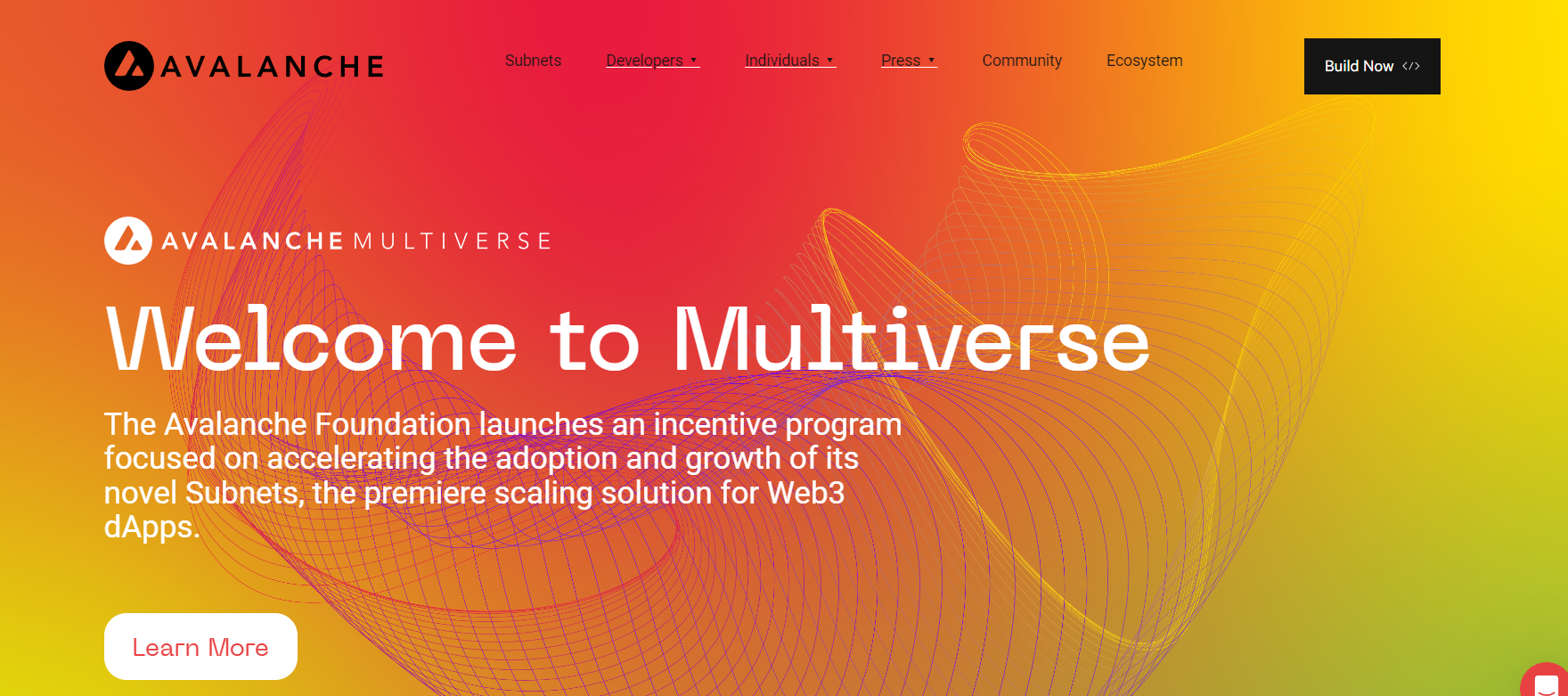
Avalanche is a multi-chain blockchain network whose Primary Network contains the C-Chain, P-Chain and X-Chain. It also supports independent Avalanche Layer 1 networks, formerly discussed primarily as Subnets. This architecture separates general-purpose smart contracts, platform coordination and asset operations.
This guide explains Avalanche’s current design, AVAX, custom L1s and the security, bridge and decentralisation risks users and developers should evaluate.
What Is Avalanche?
Avalanche is a heterogeneous network of blockchains rather than one execution environment. The official Avalanche Primary Network guide identifies three built-in chains with different responsibilities.
AvalancheGo is the node implementation used to validate the Primary Network and compatible Avalanche L1s. The network uses protocols from the Snow family to reach consensus and finalise transactions.
Avalanche Primary Network
C-Chain
The Contract Chain implements the Ethereum Virtual Machine. Developers can deploy Solidity contracts and use familiar Ethereum tooling. Most DeFi applications and wallet interactions associated with Avalanche operate on the C-Chain.
P-Chain
The Platform Chain coordinates validators, staking and Avalanche L1 operations. It records L1s and validator relationships and supports platform-level transactions.
X-Chain
The Exchange Chain manages Avalanche Native Tokens and asset operations. The X-Chain, P-Chain and C-Chain have different address and transaction models, so users must choose the correct chain when transferring assets.
What Are Avalanche L1s?
Avalanche L1s are application-specific or sovereign blockchain networks created within the Avalanche ecosystem. Earlier material often calls these Subnets, but current documentation uses Avalanche L1 for converted networks under the newer architecture.
The Avalanche L1 documentation says workloads are isolated: congestion on one L1 does not directly raise gas prices on another. An L1 can choose its execution logic, validator set, native token, fee model and access rules.
Independence is also a risk. Each L1 must establish sufficient validators, economic security, reliable infrastructure and governance. Security should not be assumed to equal the Primary Network merely because both use Avalanche technology.
The Role of AVAX
AVAX is the native asset of the Primary Network. It is used for transaction fees, staking and platform operations. Fees and staking requirements can change through protocol upgrades, so users should consult current network documentation.
AVAX price volatility affects validator economics and users who need the token for fees. Holding AVAX does not grant ownership of every application or L1 deployed in the ecosystem.
Avalanche Benefits
- EVM compatibility through the C-Chain;
- fast probabilistic finality;
- separate chains for contracts, platform operations and assets;
- customisable Avalanche L1 networks;
- isolated workloads and fee markets across L1s;
- support for public, permissioned and application-specific designs.
Performance claims should be assessed under realistic load, validator distribution and application conditions. Headline throughput is not the same as sustained user experience.
Avalanche Risks
Smart-contract risk
DeFi applications can contain coding errors, faulty upgrade controls or manipulated oracles. EVM compatibility makes deployment easier but also allows vulnerable code patterns to be reproduced.
Bridge and interoperability risk
Moving assets between Ethereum, the C-Chain and custom L1s may depend on bridges or messaging protocols. Contract bugs, validator compromise or incorrect routes can cause loss.
L1 validator risk
A custom L1 chooses its own validator arrangement and security economics. Small or permissioned sets may create censorship, collusion or downtime risk.
Chain-selection and address risk
C-, P- and X-Chain transfers are not interchangeable. Sending an asset through an unsupported network or wrong address format can make recovery difficult or impossible.
Token and liquidity risk
AVAX and application tokens can be highly volatile. Liquidity can disappear during stress, and incentives may not compensate for impermanent loss or smart-contract exposure.
Governance and upgrade risk
Network and application upgrades can alter fees, compatibility or validator requirements. Users should understand who controls contracts and how emergency decisions are made.
Avalanche DeFi
The C-Chain hosts exchanges, lending markets, stablecoins and other applications. Low transaction cost can improve access, but users still face liquidation, oracle, stablecoin and protocol-governance risks.
For context, see our guides to decentralised finance and cross-chain liquidity.
How to Use Avalanche More Safely
- Confirm whether an application uses the C-Chain or a custom L1.
- Use official network and contract details.
- Verify bridge routes and destination-chain support.
- Review validator and governance design for each L1.
- Inspect audits, upgrade keys and oracle dependencies.
- Start with a small test transfer.
- Keep enough AVAX for necessary network fees.
- Separate network risk from application and token risk.
The Future of Avalanche
Avalanche’s strategy centres on a shared multi-chain ecosystem rather than putting every workload on one chain. Custom L1s can give institutions and developers control over performance, compliance and token economics while retaining links with Avalanche infrastructure.
The model succeeds only if each network’s security and interoperability are transparent. Users should evaluate the exact chain and application they use, not rely on the Avalanche name as a blanket security guarantee.
This article is educational and does not constitute investment advice. Blockchain networks, bridges, DeFi and cryptoassets can result in total loss.
FINTECH BRIEFING · A FUTURECENTRAL BRIEFING
Get practical financial AI analysis in your inbox.
Useful signals, focused analysis and decision questions on AI in banking, payments, lending, insurance, wealth and risk.
Free to subscribe. Confirm your email after signing up. Unsubscribe at any time.