
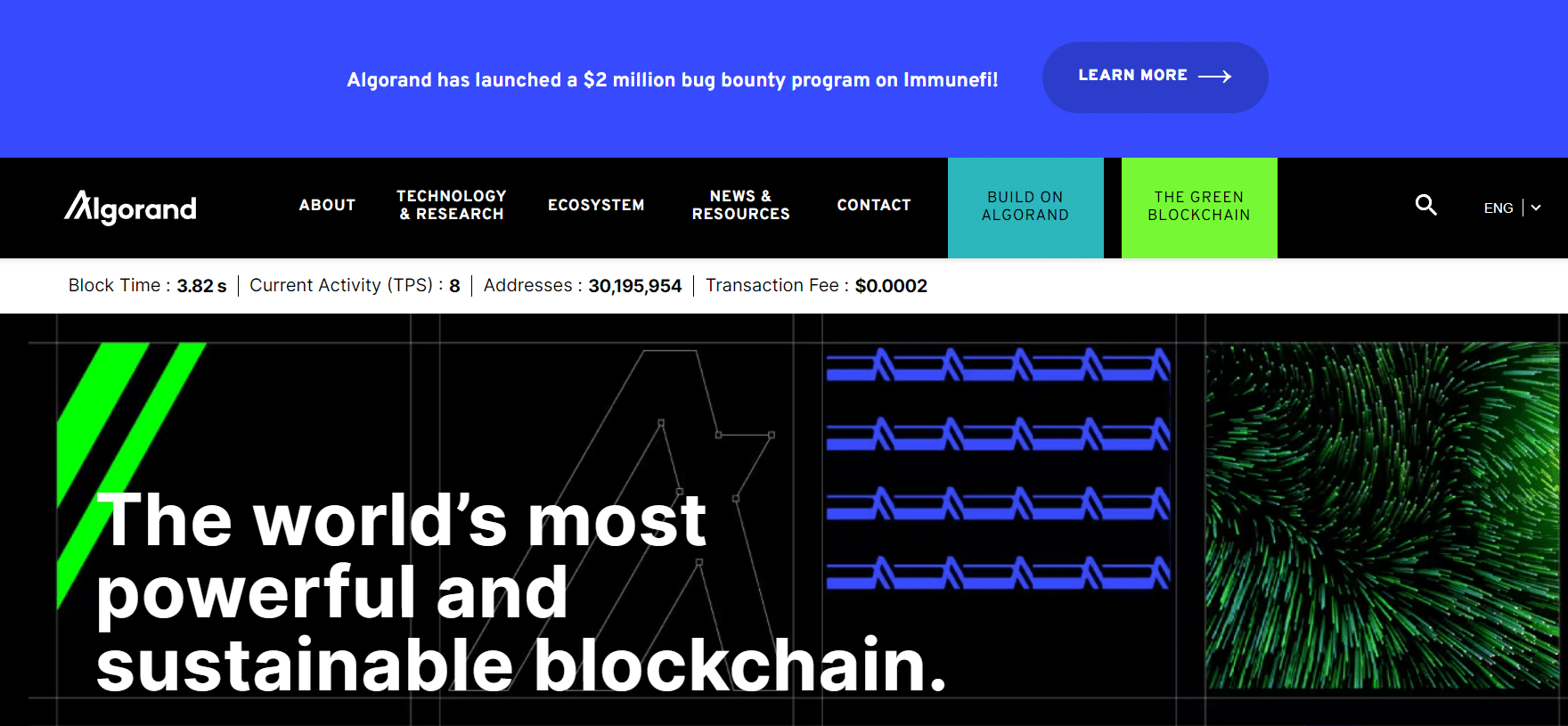
Algorand is a Layer-1 blockchain designed around Pure Proof of Stake, rapid finality, native asset issuance and programmable applications. It aims to support payments, tokenization and decentralized applications without proof-of-work mining. This guide explains how its consensus, smart contracts and Algorand Standard Assets work, along with the operational, economic and ecosystem risks users should assess.
What Is Algorand?
Algorand is an independent blockchain network created from research led by cryptographer Silvio Micali. Its native asset, ALGO, is used for transaction fees, participation and other ecosystem functions. Applications can create on-chain logic and issue assets directly through Layer-1 features.
Like any public blockchain, Algorand combines a protocol, validator or participation infrastructure, wallets, applications, exchanges and developer tooling. The protocol can provide finality and asset rules, but it cannot guarantee that every application, token issuer, bridge or user interface built on top of it is safe.
How Pure Proof of Stake Works
Algorand uses a proof-of-stake design in which eligible accounts can participate in block proposal and validation. Cryptographic sortition privately selects participants for protocol roles in proportion to stake. The selection process is intended to make committees difficult to predict or target before they act.
Finality is a central design objective. Once the network agrees on a block, applications do not need to wait through a long chain of probabilistic confirmations. This can be useful for payments and asset transfers, but users still face wallet, exchange, bridge and application-level settlement risks outside the base consensus.
Smart Contracts and the AVM
Algorand applications run through the Algorand Virtual Machine. Smart contracts can read on-chain information, maintain state and execute approved transactions. The official smart-contract documentation describes applications as remotely callable programs deployed to the blockchain.
Developers can use higher-level tools that compile to the network’s execution language, but the same security principle applies as on other chains: deployed logic should be reviewed, tested and monitored. A base layer can operate correctly while a flawed application loses user funds.
Algorand Standard Assets
Algorand Standard Assets, or ASAs, are native Layer-1 assets. They can represent fungible tokens, unique collectibles, loyalty points, stablecoins or other rights. Unlike a token standard implemented entirely through a separate smart contract, ASA creation and transfer rules are supported by the protocol.
The official ASA guide notes important account requirements. A recipient normally opts in before receiving an asset, and creating or holding assets affects the account’s minimum-balance requirement. Issuers can configure management, freeze or clawback controls, so investors must inspect an asset’s parameters rather than assume every ASA is decentralized.
Blockchain Use Cases
- Payments: rapid finality and predictable transaction processing can support transfers and settlement applications.
- Tokenization: ASAs can represent digital units, credentials or claims, subject to issuer design and applicable law.
- DeFi: exchanges, lending markets and other applications can run through Algorand smart contracts.
- Collectibles and gaming: unique or fungible assets can be issued natively.
- Institutional workflows: applications can combine controlled assets with programmable settlement.
A possible use case is not proof of adoption or investment value. Projects can migrate, close or fail to attract durable liquidity. Readers comparing Layer-1 systems may also review our guides to Avalanche and Celo.
ALGO and Network Economics
ALGO is the network’s native asset, but ownership does not represent equity in a company. Its market price reflects demand, supply, liquidity, ecosystem expectations and broader crypto conditions. Participation or reward programs can change, and quoted annual returns may not account for dilution, custody fees, taxes or price losses.
Users should distinguish consensus participation from third-party “staking” products offered by exchanges or applications. The provider, withdrawal rules, custody arrangement and legal terms can add risks that do not arise from the base protocol alone.
Key Risks
- Market risk: ALGO and ecosystem tokens can be highly volatile.
- Application risk: smart-contract vulnerabilities can cause irreversible losses.
- Centralization risk: stake concentration, infrastructure dependencies or privileged application controls may reduce practical decentralization.
- Asset-issuer risk: an ASA may include freeze, clawback or administrative authorities.
- Liquidity risk: smaller markets can produce large spreads and difficult exits.
- Bridge risk: cross-chain assets introduce contracts, validators or custodians outside Algorand.
- Regulatory risk: token and service treatment varies by jurisdiction.
- Wallet risk: lost keys, phishing and incorrect transactions can permanently remove access.
How to Evaluate a Project
Verify the application and asset IDs through official channels. Review smart-contract audits, upgrade controls, administrator powers and incident history. For an ASA, inspect reserve, manager, freeze and clawback addresses. For DeFi, assess liquidity, oracle design, collateral, liquidation rules and whether advertised returns depend on temporary incentives.
Use a small test transaction, confirm the receiving address and keep enough ALGO for fees and minimum-balance requirements. Avoid signing unexplained application calls. A familiar brand name or polished interface should not substitute for checking the on-chain permissions.
Frequently Asked Questions
Is Algorand an Ethereum Layer 2?
No. Algorand is an independent Layer-1 blockchain with its own consensus, native asset and application environment.
Are all Algorand assets decentralized?
No. ASA issuers can configure administrative controls. The exact parameters and issuer arrangements determine an asset’s risk.
Does rapid finality make Algorand applications risk-free?
No. Finality addresses base-layer transaction confirmation, not contract bugs, token design, bridges, custody, phishing or market losses.
Conclusion
Algorand combines Pure Proof of Stake, rapid finality, native asset issuance and Layer-1 smart contracts in a distinct blockchain architecture. Its technical design can support useful applications, but evaluation should extend beyond throughput claims to real liquidity, application security, asset controls, governance, user adoption and the risks attached to ALGO and each project.
FINTECH BRIEFING · A FUTURECENTRAL BRIEFING
Get practical financial AI analysis in your inbox.
Useful signals, focused analysis and decision questions on AI in banking, payments, lending, insurance, wealth and risk.
Free to subscribe. Confirm your email after signing up. Unsubscribe at any time.