

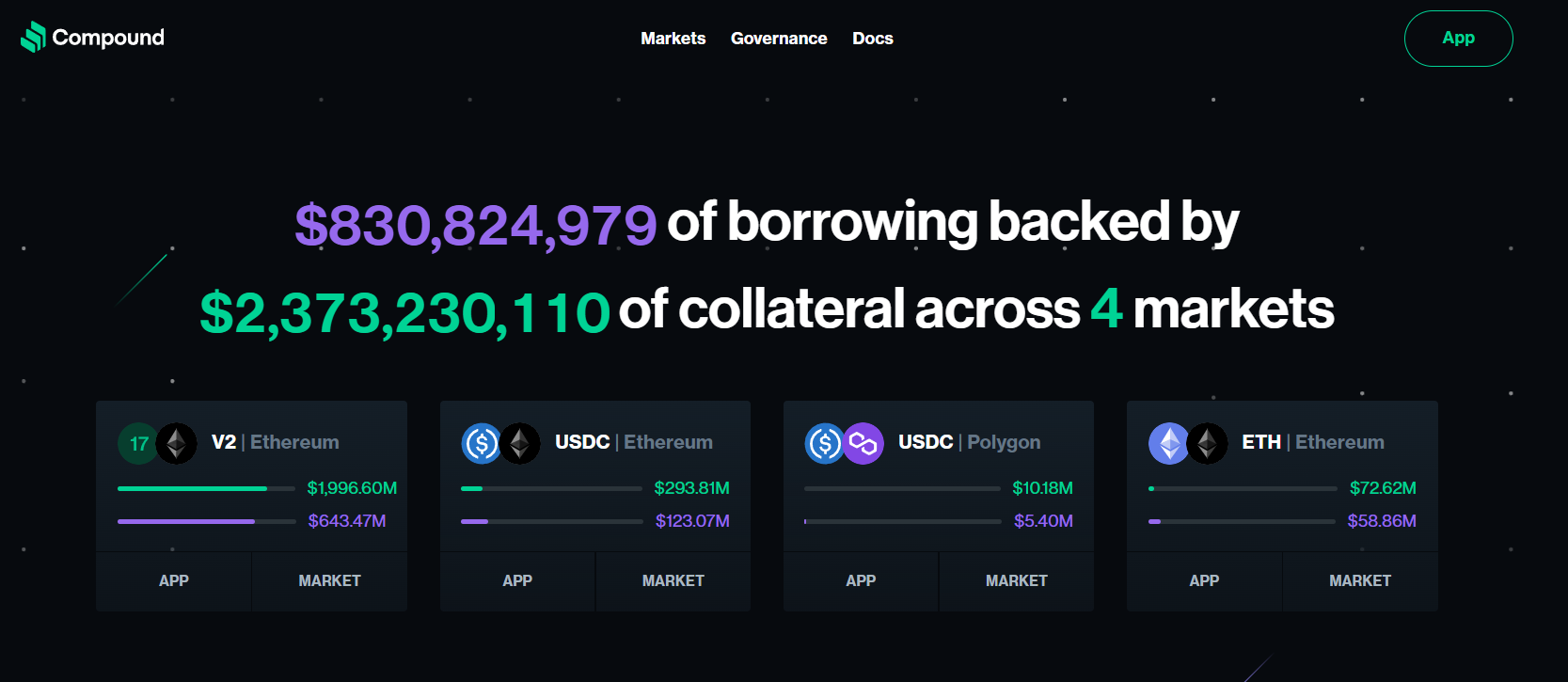
Compound is a decentralized lending protocol that lets users supply a market’s base asset to earn variable interest or post supported collateral to borrow that base asset. Compound III, also called Comet, differs materially from older Compound v2 markets, so users should understand the version, network and market before committing funds. This guide explains the current design, interest rates, governance and principal risks.
What Is Compound?
Compound is a set of smart contracts deployed on Ethereum-compatible networks. It does not operate like a bank account: users interact through blockchain transactions, rates change automatically, and positions can be liquidated when collateral becomes insufficient. Compound III markets revolve around one borrowable base asset, while approved collateral assets support borrowing capacity.
The official Compound III documentation states that accounts can earn interest by supplying the base asset. Supplying collateral is different: collateral increases borrowing capacity but does not itself earn interest in Compound III. This distinction is essential when comparing advertised rates or planning a leveraged position.
How Compound Lending and Borrowing Work
Supplying the Base Asset
A supplier transfers the market’s base asset to the Compound smart contract. A positive base-asset balance accrues interest according to the market’s supply-rate model. The rate is variable rather than guaranteed and changes with utilization and governance-set parameters.
Posting Collateral and Borrowing
A borrower supplies an approved collateral asset, which increases borrowing capacity according to its collateral factor. The borrower can then withdraw the market’s base asset within that limit. Compound’s collateral and borrowing guide explains that supply caps limit protocol exposure and that each collateral asset can have a different borrowing factor.
Borrowed balances accrue interest. If falling collateral prices, rising debt or parameter changes make an account liquidatable, the protocol can absorb the debt and sell collateral. Liquidation protects the market but can create a sudden loss for the borrower, especially during volatile conditions or network congestion.
How Compound Interest Rates Are Set
Compound uses separate supply and borrow rate models. Both depend on utilization: broadly, the share of available base assets currently borrowed. Rates normally rise as utilization increases, with a steeper change above a governance-defined “kink.” Interest accrues over time at the protocol level.
The displayed annual percentage yield is therefore an estimate based on current conditions, not a fixed promise. A rate seen before a deposit can change after the transaction. Token incentives may also change independently of the underlying lending rate. Users should separate protocol interest from temporary rewards when estimating returns.
Compound Governance and the COMP Token
Compound governance can propose, vote on and implement changes to protocol parameters and contracts. COMP holders may delegate voting power, but holding COMP does not guarantee investment returns or eliminate smart-contract risk. Governance decisions can affect supported assets, caps, collateral factors, rate models and upgrades.
Because protocol rules can evolve, users should review active proposals and current market parameters instead of relying on an old article or screenshot. Governance adds transparency and community control, but it also introduces participation, concentration and execution risks.
Benefits of Compound
- Non-custodial access: users interact from compatible wallets without opening a conventional deposit account.
- Transparent rules: balances, parameters and transactions are recorded on-chain.
- Programmatic integration: developers can build applications around the protocol’s contracts.
- Variable liquidity markets: suppliers and borrowers can access algorithmic markets without bilateral negotiation.
These benefits do not make Compound suitable for every user. Transaction fees, wallet security and protocol complexity may outweigh the value for small positions or inexperienced participants. Readers new to the sector should first review our explanation of decentralized finance and our guide to DeFi borrowing risks.
Compound Risks
- Smart-contract risk: audits and formal methods reduce risk but cannot guarantee defect-free code.
- Liquidation risk: collateral can be sold when a position breaches the liquidation threshold.
- Oracle risk: incorrect or disrupted price data can affect account calculations.
- Asset risk: stablecoins can lose their peg, collateral can collapse, and bridged assets add dependencies.
- Liquidity risk: stressed markets may make exits costly or delayed.
- Governance risk: parameter changes, concentrated voting power or faulty proposals can harm users.
- Network risk: congestion, failed transactions and gas costs can prevent timely position management.
- Regulatory and tax risk: legal treatment differs by location and can change.
How to Evaluate a Compound Position
Confirm the exact network, market and contract address through official sources. Review the base asset, approved collateral, supply caps, rate model, liquidation factors and current utilization. Estimate returns after gas, incentives and taxes. Borrowers should maintain a conservative collateral buffer and monitor the position rather than treating the maximum borrowing limit as a target.
Wallet approvals also deserve attention. Use a hardware wallet where appropriate, verify every transaction, avoid unsolicited links and revoke permissions that are no longer needed. A small test transaction can help detect a wrong network or interface before more capital is exposed.
Frequently Asked Questions
Does every asset supplied to Compound earn interest?
No. In Compound III, the supplied base asset can earn interest, while collateral assets support borrowing capacity and generally do not earn protocol interest.
Are Compound rates fixed?
No. Supply and borrow rates vary with utilization and governance-set rate models. Displayed yields can change after a user enters the market.
Can a Compound borrower lose collateral?
Yes. If a position becomes liquidatable, collateral can be sold under the protocol’s rules. Market volatility and delayed transactions can increase that risk.
Conclusion
Compound provides transparent, programmable crypto lending markets, but its variable rates and overcollateralized borrowing model require active risk management. The central questions are not simply what yield is displayed, but which asset earns it, what collateral supports the position, and how liquidation, contract, oracle and governance risks interact.