

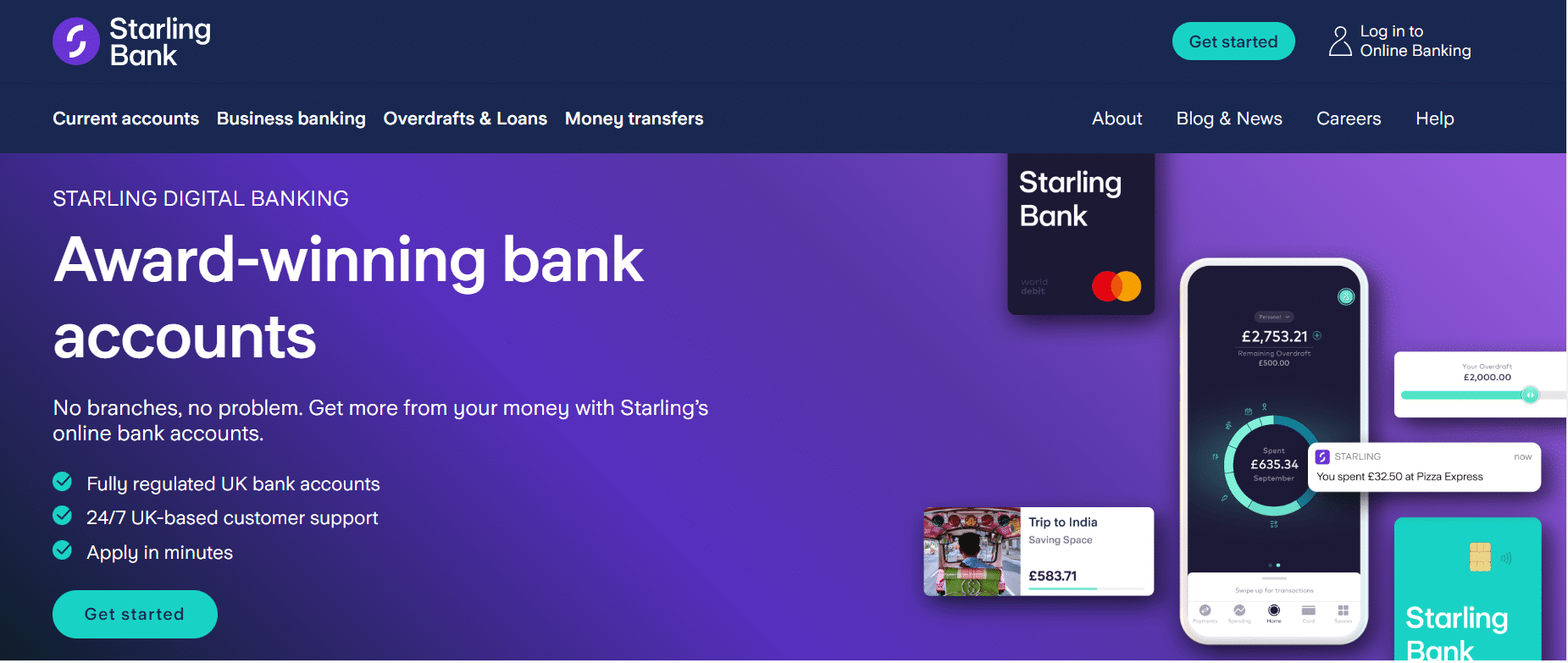
Starling Bank is a UK-licensed, app-based bank offering current accounts, business banking, savings and related financial tools. Unlike an e-money wallet, eligible deposits are held by a regulated bank and can receive Financial Services Compensation Scheme protection. This guide explains Starling’s model, app features, business proposition, technology platform and customer risks.
What Is Starling Bank?
Starling was founded by Anne Boden in 2014 and received a UK banking licence in 2016. It operates primarily through mobile and online channels rather than a traditional branch network. Customers can use the app to open eligible accounts, make payments, manage cards, review spending and access support.
Starling Bank Limited is the regulated deposit-taking entity, while the wider Starling Group also develops banking technology. The distinction matters because software supplied to another bank is not automatically a Starling deposit or covered by Starling’s own protection arrangements.
Starling Bank Accounts and Features
Personal Current Accounts
Personal accounts can include a debit card, UK payments, scheduled transfers, transaction notifications, cash-withdrawal access and app-based card controls. Eligibility and fees should be checked in the current terms. App convenience does not remove overdraft interest, foreign-payment costs or cash-deposit limits where they apply.
Spaces, Budgets and Spending Insights
Starling’s money-management tools can separate funds into Spaces, categorize transactions and support saving or bill planning. These features organize one balance; they do not guarantee that a customer will meet a goal or avoid overdraft costs. Automated categorization can also require correction.
Savings
Eligible customers may use savings products with rates and withdrawal terms defined at the time. Rates can change, and separate products can have different conditions. Compare the annual equivalent rate, access restrictions and total FSCS exposure across all eligible deposits held with Starling Bank Limited.
Business Banking
Starling serves sole traders and companies through accounts that can integrate with accounting, invoicing and expense workflows. Paid add-ons may offer additional functionality. Businesses should evaluate transaction limits, cash handling, international needs, user permissions and service continuity rather than choosing solely on monthly price.
Deposit Protection at Starling Bank
Starling’s current FSCS information sheet states that eligible deposits are protected up to £120,000 per depositor per bank, subject to exclusions and aggregation rules. Joint accounts can receive a limit for each eligible holder, while eligible balances across a person’s accounts with the same bank are combined.
Protection limits can change, and temporary high-balance rules may provide additional cover for certain life events. Customers should confirm eligibility on their account statement and use current FSCS guidance rather than relying on the former £85,000 limit still found in older articles.
Starling’s Banking Technology Business
Starling also commercializes its technology through Engine, a software platform supplied to other financial institutions. This provides a source of group revenue distinct from UK customer banking and creates international growth opportunities without opening a Starling-branded bank in every country.
Software clients remain responsible for their own licences, customers and product obligations. A bank powered by Engine is not necessarily owned by Starling, and its deposits do not automatically sit at Starling Bank Limited.
Starling Bank Performance and Strategy
The bank publishes audited results and operating metrics. Starling’s 2026 annual report page reports a fifth consecutive year of profitability and continued growth in the group and Engine. These figures describe a period, not a guarantee of future performance.
A reader assessing the company should consider net interest margin, credit impairments, customer activity, deposits, regulatory capital, technology revenue and conduct outcomes. Headline account totals alone do not show profitability or service quality.
Potential Benefits
- Licensed-bank structure: eligible deposits can receive statutory protection.
- App controls: real-time notifications and card settings can improve visibility.
- Money organization: Spaces and categorization support budgeting workflows.
- Business focus: accounts and integrations address small-business administration.
- Modern technology: a unified platform can support faster product and service changes.
These benefits should be compared with customer needs for branches, cash deposits, international services, joint access and specialist lending. See our guides to digital versus traditional banks and Revolut.
Starling Bank Risks and Limitations
- Digital-access risk: a lost phone, outage or account review can interrupt service.
- Fraud risk: criminals use impersonation, authorized-payment scams and account takeover.
- Credit risk: lending losses can rise during economic stress.
- Interest-rate risk: changes affect margins, deposit pricing and customers with borrowing.
- Operational risk: growth depends on resilient technology, support and third parties.
- Conduct risk: financial-crime controls and customer treatment require continued investment.
- Concentration risk: the bank remains primarily connected to the UK market.
How to Use Starling More Safely
Secure the phone and email account, enable biometric controls where suitable, and never disclose one-time codes. Verify whether an incoming call is genuine through the app or a trusted number. Review payee details carefully because scammers often create urgency around transfers.
Keep an alternative payment method and download important statements. Check current fees, overdraft terms and FSCS eligibility. Businesses should maintain appropriate approval controls and ensure more than one authorized person can manage continuity.
Frequently Asked Questions
Is Starling a real bank?
Yes. Starling Bank Limited is a UK-licensed bank, not only an e-money application.
Are all balances protected up to £120,000?
No. The limit applies to eligible deposits and is aggregated per depositor per bank. Exclusions and temporary high-balance rules can apply.
Is Engine the same as a Starling account?
No. Engine is banking software supplied to other institutions. Their accounts, legal entities and protections are separate.
Conclusion
Starling Bank combines a regulated UK deposit institution with a modern mobile experience and a separate technology-platform strategy. Its app can make everyday and business banking easier, but customers should still evaluate protection limits, fees, access needs, fraud controls and service resilience. Digital delivery changes the interface; it does not remove ordinary banking risks.