

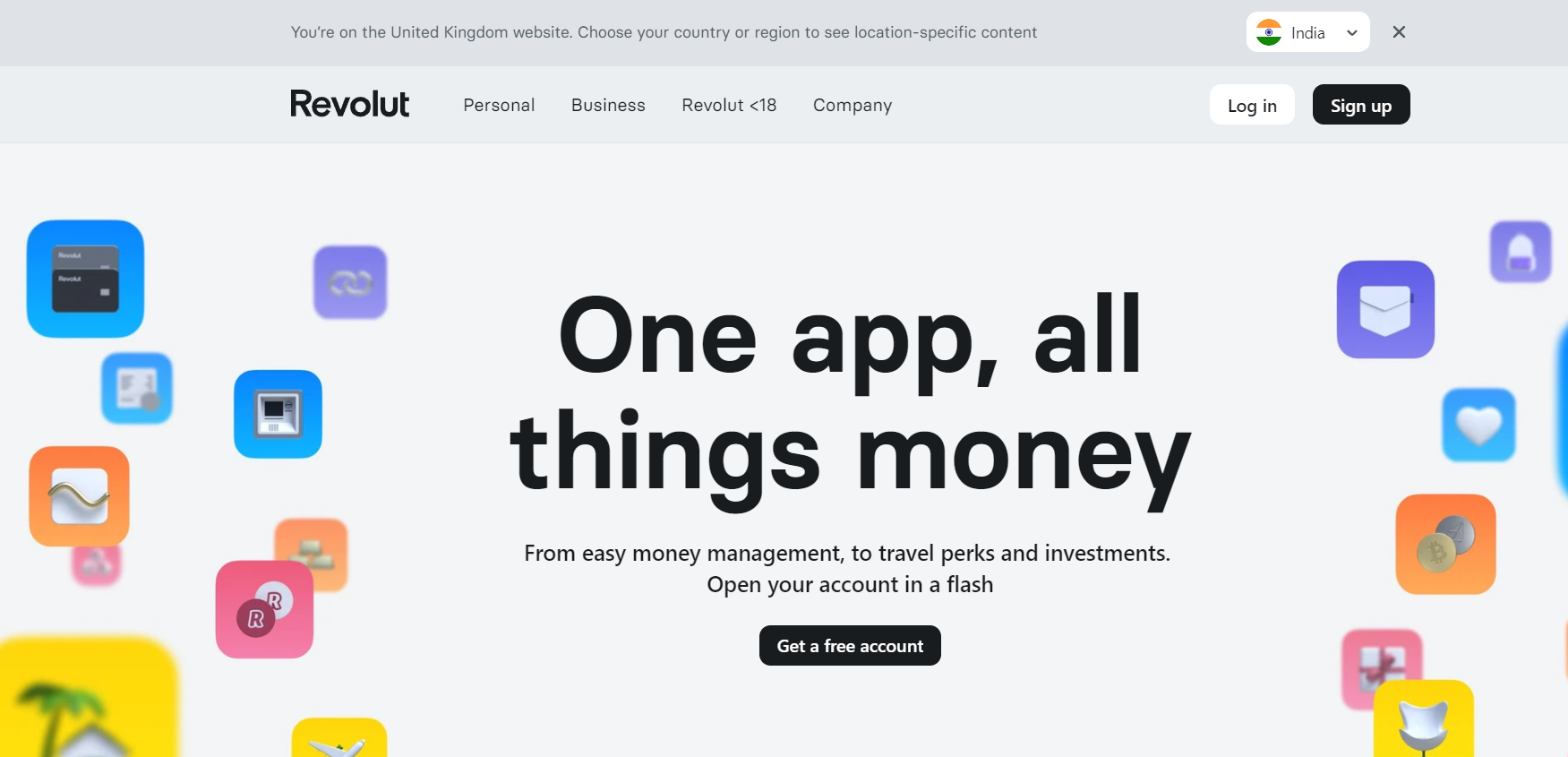
Revolut is a global financial application offering payments, cards, foreign exchange, transfers and market-specific banking, savings, investment or crypto services. It is not one identical bank everywhere: customers contract with different regulated entities and receive different protections by country. This guide explains the platform, its current licensing position and the costs and risks users should check.
What Is Revolut?
Revolut was founded in 2015 by Nikolay Storonsky and Vlad Yatsenko. Its early proposition centered on a mobile account and card for spending and exchanging currencies. The application subsequently expanded into international transfers, subscriptions, savings-like products, investments, business accounts and crypto access, subject to jurisdiction.
Calling Revolut simply a “digital bank” can be misleading without a location. In some markets a licensed bank provides eligible accounts; elsewhere an electronic-money, payments, brokerage or partner entity may provide the service. Users should read the legal entity, safeguarding and compensation disclosures displayed for their account.
Revolut Products and Features
Accounts, Cards and Payments
The app can provide virtual and physical cards, payment notifications, transfers, budgeting tools and card controls. Availability, cash-withdrawal limits and replacement fees vary by plan. A premium subscription can bundle benefits, but it is valuable only if the customer actually uses them.
Foreign Exchange and International Transfers
Revolut built its brand around holding and exchanging multiple currencies. Customers should compare the live rate, markup, transfer fee, weekend or out-of-hours pricing, allowance and correspondent-bank charges. “No commission” does not necessarily mean no spread or total cost.
Savings and Credit
Eligible markets may offer bank deposits, flexible cash funds, personal loans or credit cards. A cash fund is an investment product rather than a guaranteed bank deposit. Interest, investment risk and protection depend on the exact provider and product documentation.
Investments and Crypto
Revolut can provide access to securities and cryptoassets in selected jurisdictions. Securities can lose value, and cryptoassets can be especially volatile. Ownership, transfer availability, execution venue, spread, custody and investor-compensation arrangements should be checked separately from the payment account.
Revolut Banking Licences by Market
In the European Economic Area, bank services have been provided through Revolut Bank UAB, a Lithuanian-licensed institution, with local branches and arrangements varying by country. UK authorisation developed separately: Revolut’s 2025 annual report states that its UK bank received approval to exit the mobilisation phase in March 2026.
Australia changed recently as well. APRA granted Revolut Payments Australia an ADI licence in July 2026. A licence does not mean every legacy balance or product instantly receives identical treatment; customers should confirm migration, product launch and Financial Claims Scheme information in their own terms.
Other countries can use payments, e-money or partner-bank structures. Regulatory status is therefore a current fact to verify, not a permanent global label. The relevant regulator’s register and the in-app legal agreement are the strongest sources.
Potential Benefits
- One mobile interface: payments, cards, currencies and selected financial products can be managed together.
- International use: multicurrency balances and controls can simplify travel and cross-border spending.
- Fast controls: users can freeze cards, create virtual cards and monitor transactions quickly.
- Product competition: transparent previews can pressure incumbents on price and convenience.
- Business tools: selected plans include team cards, expenses and international payments.
Convenience can also encourage concentration. A customer who uses one app for spending, savings, investments and crypto may face broader disruption if the account is restricted or the service is unavailable. Compare Revolut with our profiles of N26 and Starling Bank.
Revolut Fees and Pricing
Total cost can include a monthly plan, card delivery, cash-withdrawal charges, foreign-exchange markups, transfer fees, investment commissions, spreads and early-termination terms. Limits and prices change, so an evergreen article should not freeze a promotional rate.
Before a transaction, review the final quote and recipient amount. For a subscription, calculate annual cost against benefits actually used. Travel insurance, lounge access and other perks have eligibility, exclusions and claims procedures that should be read like separate contracts.
Revolut Risks and Limitations
- Entity and protection risk: deposit, safeguarding and compensation rules differ by product and country.
- Account-restriction risk: fraud, sanctions or verification reviews can delay access while checks are completed.
- Cyber and fraud risk: phishing, social engineering and device compromise can defeat app controls.
- Operational risk: outages may affect multiple services concentrated in one application.
- Pricing risk: allowances, spreads and plan terms can change.
- Investment risk: securities, funds and cryptoassets can lose value and may not have deposit protection.
- Regulatory risk: rapid international expansion requires many licences, controls and local processes.
How to Use Revolut More Safely
Verify the legal entity and protection that applies to each product. Enable strong device security, protect one-time codes, and use in-app support rather than links sent through unsolicited messages. Review recipients carefully because an authorized transfer to a scammer may be difficult to recover.
Maintain backup access to essential funds and payments. Download statements and keep contact details current. If using crypto or investments, distinguish those balances from deposits and avoid assuming that a single app produces a single protection regime.
Frequently Asked Questions
Is Revolut a bank?
It operates licensed banks in certain markets, while other services may be provided by payments, e-money, investment or partner entities. Check the entity shown in your agreement.
Does Revolut always offer the interbank exchange rate?
No universal pricing claim should be assumed. Rate, markup, allowance, time, plan and currency can affect the final cost.
Are investments in Revolut deposit-protected?
Usually not as bank deposits. Securities, funds and crypto products have separate custody and investor-protection arrangements and can lose value.
Conclusion
Revolut has expanded a travel-friendly multicurrency app into a broad international financial platform. Its strongest advantage is convenient integration across payments and selected financial products. The essential due diligence is jurisdiction-specific: identify the provider, protection, price and risk of each service instead of assuming the Revolut brand creates one global bank account.
FINTECH BRIEFING · A FUTURECENTRAL BRIEFING
Get practical financial AI analysis in your inbox.
Useful signals, focused analysis and decision questions on AI in banking, payments, lending, insurance, wealth and risk.
Free to subscribe. Confirm your email after signing up. Unsubscribe at any time.