

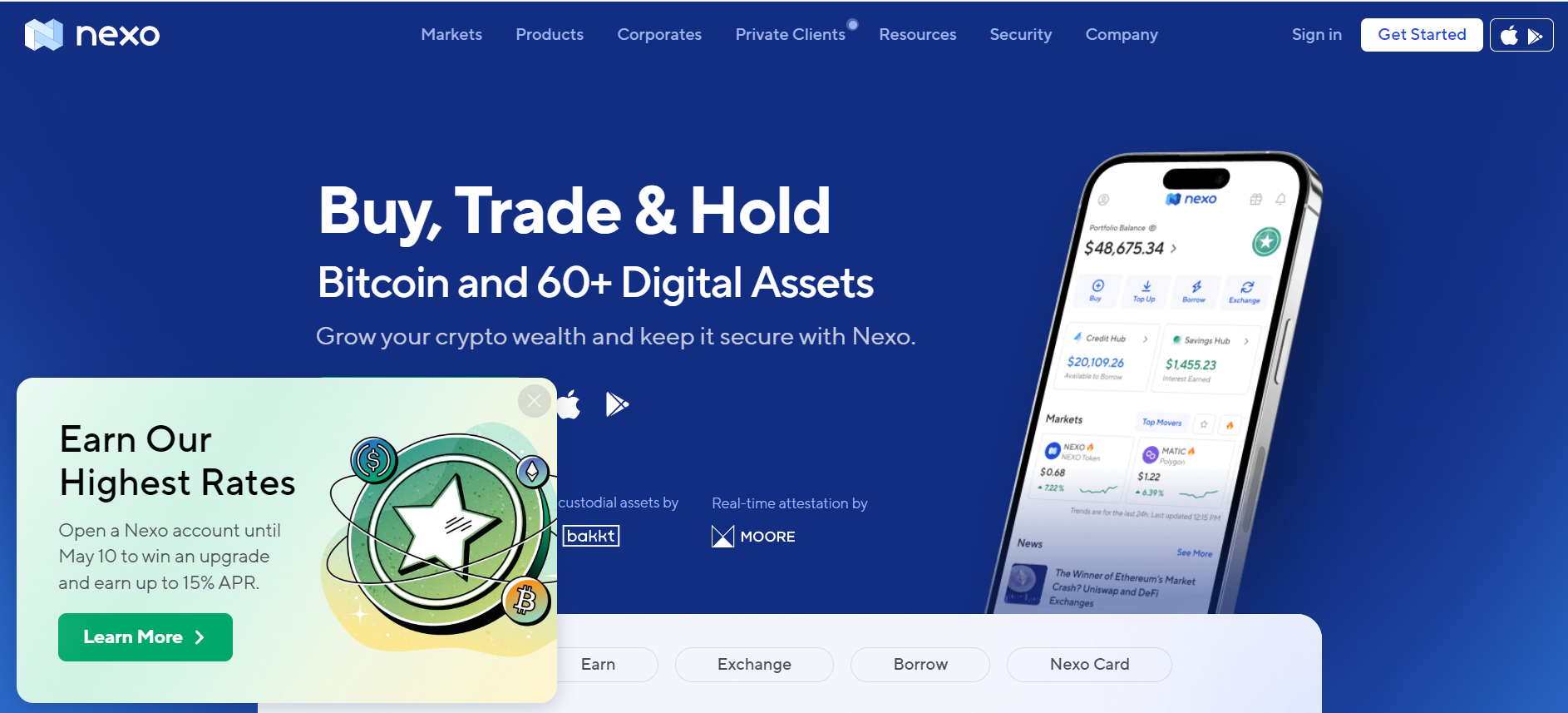
Nexo is a centralized digital-asset platform offering crypto-backed credit, yield products, exchange services and a payment card in eligible markets. Its credit line lets customers borrow against supported crypto instead of selling it. That can preserve market exposure, but it also creates leverage, liquidation and counterparty risk. Availability, rates and product terms vary by country and customer tier.
What is the platform?
Nexo is a custodial crypto wealth platform operating since 2018. Unlike a decentralized lending protocol, it holds customer assets and manages borrowing through its own account system. Users therefore depend on Nexo for custody, execution, withdrawals and compliance. The platform combines several services, but this guide focuses on its crypto-backed Credit Line because that product creates the most important financial risks to understand.
Nexo markets borrowing without a conventional credit check because eligible digital assets serve as collateral. A customer transfers supported assets, receives a borrowing limit and can draw funds in available bank currencies or stablecoins. The precise assets, limits and transfer methods depend on region and account eligibility.
How the Nexo Credit Line works
The central measure is loan-to-value, or LTV. LTV compares the outstanding loan with the market value of collateral. If a customer borrows $5,000 against collateral worth $10,000, the starting LTV is 50%. Nexo assigns different maximum LTVs to different assets, reflecting price volatility and liquidity.
- Add collateral: transfer a supported asset to the Credit Line Wallet.
- Check borrowing power: the platform calculates a limit from the asset’s current value and LTV.
- Draw funds: borrow an eligible fiat currency or stablecoin where available.
- Accrue interest: interest applies to the amount used and may vary by loyalty tier, product and jurisdiction.
- Repay or maintain: repay partially or fully, or add collateral if the LTV rises.
A credit line is reusable: after repayment, borrowing capacity can become available again. It is not an unsecured personal loan, and keeping the loan open exposes the borrower to changes in collateral value and terms.
Nexo rates and advertised offers
Nexo advertises starting rates, but a headline rate should not be treated as the rate every borrower receives. The actual cost may depend on loyalty status, portfolio composition, asset type, market and promotional eligibility. Rates and tiers can change, so borrowers should confirm the annual rate displayed inside their account immediately before drawing funds.
Interest is only one part of cost. Users should also consider conversion spreads, withdrawal charges, network fees, potential tax consequences and the cost of maintaining extra collateral. A low nominal rate can still produce an unattractive result if collateral falls and is sold automatically.
Automatic repayment and liquidation risk
If collateral prices fall, LTV rises. Nexo says that when the ratio reaches a defined threshold, the system may automatically use part of the collateral to repay the loan. This protects the platform’s credit exposure but can lock in a loss for the customer. Crypto markets trade continuously, so a sharp overnight move may trigger action before a user can add collateral.
Borrowing less than the maximum creates a buffer. Diversifying collateral may reduce dependence on one token, but correlated market declines can still affect several assets together. Stablecoin collateral has different risks, including issuer, reserve, redemption and depegging risk.
Benefits of crypto-backed borrowing
- Liquidity without an immediate sale: customers may access cash or stablecoins while retaining exposure to pledged assets.
- No traditional credit underwriting: borrowing capacity is based mainly on collateral rather than a consumer credit file.
- Flexible repayment: Nexo describes partial or full repayment without a fixed monthly instalment schedule for the standard Credit Line.
- Multiple collateral choices: supported assets can be combined, subject to current platform rules.
These features can be useful for short-term liquidity, but they do not remove the economic cost of leverage. Borrowing to purchase more crypto amplifies both gains and losses.
Key Nexo risks
Counterparty and custody risk: customers do not control the private keys for assets held on the platform. Access depends on Nexo’s operational resilience, legal entities and withdrawal policies.
Market and liquidation risk: falling collateral prices can raise LTV rapidly and trigger automatic repayment through asset sales. A later price recovery does not reverse a completed sale.
Interest-rate and terms risk: advertised rates, tiers, eligible assets and limits can change. Promotions may expire, and regional versions of the product can differ materially.
Stablecoin and banking risk: borrowing or repaying through stablecoins adds issuer and peg exposure. Fiat transfers depend on banking partners and local availability.
Regulatory and tax risk: crypto lending rules differ across jurisdictions. Borrowing may not itself be a taxable disposal everywhere, but collateral sales, interest payments and token conversions can have tax effects. Nexo itself advises users to consult a qualified tax professional.
Security risk: account takeover, phishing and device compromise remain possible even when a platform uses institutional security controls. Strong unique passwords, multifactor authentication and withdrawal safeguards are essential.
How to evaluate a crypto-backed loan
- Verify the live interest rate, LTV and automatic repayment threshold in your account.
- Model a 30%, 50% and 70% fall in collateral value.
- Keep enough liquid assets outside the platform to repay or add collateral.
- Read the terms for the legal entity serving your country.
- Do not assume a promotional or loyalty rate will remain available.
- Start with a small draw and test both repayment and withdrawal.
For comparison, see our guides to Aave lending, Alchemix and stablecoins. Centralized and decentralized lenders place risk in different parts of the system.
Official product sources
Nexo’s official Credit Line page explains current borrowing mechanics, supported collateral and regional offers. Customers should also read the terms displayed for their account and location before transferring assets or borrowing, because public marketing pages do not replace the binding agreement.
Conclusion
Nexo can provide convenient liquidity against crypto collateral, but convenience does not eliminate leverage. The decisive variables are LTV, collateral volatility, the rate actually offered, automatic repayment rules and platform counterparty risk. A conservative borrower uses a wide buffer, understands the exit path and treats Nexo as a custodial credit service—not a risk-free savings account.