

Robo-advisory platforms automate portfolio construction, investing and rebalancing through an app or website. They can make diversified portfolios easier to access, but platforms differ in fees, cash allocations, account types, tax tools and access to human advisers. This guide identifies ten established US services to research and explains how to compare them without treating a ranked list as personal investment advice.
Product information was reviewed in August 2026. Availability and pricing change; confirm every term on the provider’s official site before investing. Most services below primarily serve US residents.
How robo-advisory services work
A digital adviser usually asks about goals, time horizon and risk tolerance, then recommends a portfolio, often built with exchange-traded funds. Contributions are invested according to a target allocation and the account is rebalanced as markets move. Some services add tax-loss harvesting, cash management, retirement accounts or access to a human professional.
The US Securities and Exchange Commission’s Investor.gov bulletin on robo-advisers stresses that services, investment approaches and features vary widely. It advises investors to understand what information a platform uses, the products selected, total costs and the level of human interaction.
Ten robo-advisory services to research
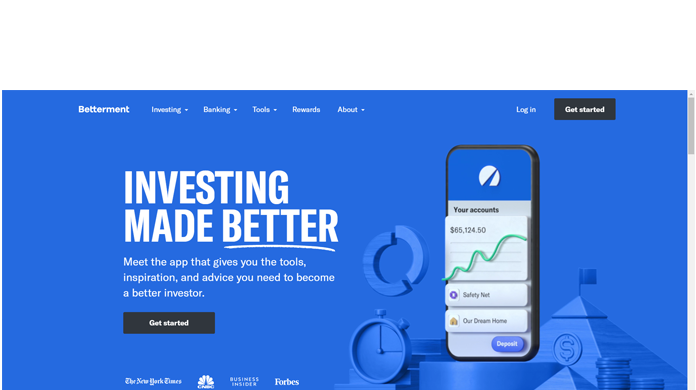
1. Betterment robo-advisory
Betterment offers automated ETF portfolios, rebalancing and tax-related tools. Its official pricing page currently describes a monthly price for smaller balances, a percentage-based tier for qualifying balances or recurring deposits, and a higher-priced Premium service with adviser access. Investors should calculate the effective fee at their own balance rather than comparing headline percentages alone.
2. Wealthfront
Wealthfront combines automated portfolios with planning and cash-management features. Review the advisory fee, fund expenses, portfolio customisation and tax-loss-harvesting eligibility. FinTech Central’s separate Wealthfront profile provides additional context, but current terms should come from the provider.
3. Schwab Intelligent Portfolios
Schwab Intelligent Portfolios builds ETF portfolios and does not advertise an advisory fee for its standard automated service. Schwab’s current pricing page lists an account minimum, while its disclosures explain portfolio fund expenses and cash allocations. “No advisory fee” does not mean the service has no economic costs, so examine the recommended cash position and underlying ETFs.
4. Fidelity Go robo-advisory
Fidelity Go is Fidelity’s automated managed-account service. Compare its balance-based pricing, eligible account types and the expenses of the funds it uses. Investors already using Fidelity may value an integrated dashboard, but convenience should not replace a total-cost comparison.
5. Vanguard Digital Advisor
Vanguard Digital Advisor provides goal-based automated portfolio management. Check eligibility, minimums, gross and net advisory costs, fund expenses and whether the planning scope covers the accounts and goals that matter to you.
6. SoFi Automated Investing
SoFi Automated Investing sits within a broader financial app. Review its current advisory charges, ETF expenses, portfolio choices and any conflicts associated with affiliated products. App integration can be useful, but it should be evaluated separately from investment quality.
7. Ellevest robo-advisory
Ellevest offers investing and financial-planning services designed around specific customer needs. Its service model and pricing have evolved, so prospective clients should verify whether automated portfolio management, coaching or wealth management is the relevant offering.
8. Acorns
Acorns uses subscription plans and features that can automate small recurring investments. The effective percentage cost can be high on a small balance, even when the absolute monthly fee looks modest. Compare the subscription with the value of features you will actually use.
9. E*TRADE Core Portfolios
E*TRADE Core Portfolios provides automated portfolio management within the E*TRADE ecosystem. Check its minimum, advisory fee, ETF costs, portfolio options and how the service handles tax-sensitive accounts.
10. Merrill Guided Investing
Merrill Guided Investing offers digital portfolio management, with a separate option that includes adviser support. Bank integration and rewards may matter to some users, but compare the full advisory cost and service scope with independent alternatives.
How to compare robo-advisory services
A robo-advisory comparison should separate headline pricing from total ownership cost.
Total cost
Add the advisory fee, subscription, underlying fund expenses, trading costs, transfer or closure fees and the opportunity cost of any required cash allocation. Apply the cost to your likely balance for a full year.
Portfolio method
Ask which asset classes and funds the algorithm can use, whether affiliated products are favoured, how risk is measured and what triggers rebalancing. A polished questionnaire does not guarantee that the recommendation captures debt, outside assets, tax status or changing goals.
Account and tax features
Confirm support for taxable accounts, individual retirement accounts, joint accounts and trusts as needed. Tax-loss harvesting can help some taxable investors but may create wash-sale complications across accounts. It is not automatically valuable to every customer.
Human advice
Clarify whether “adviser access” means a credentialed professional who can discuss your full situation or a service representative with a narrower role. Check appointment limits, communication channels and balance thresholds.
Safety, custody and registration
Research the advisory firm and its disciplinary history through the official Investment Adviser Public Disclosure database. Identify the custodian, understand account protection and enable strong authentication. Investment losses are not covered merely because the provider is regulated.
Robo-advisory platforms versus human advisers
Automation may suit an investor with straightforward goals, a long horizon and comfort using digital tools. A human professional may add more value when tax, estate, business, insurance or family decisions interact. Hybrid services attempt to combine automated implementation with scheduled advice.
Robo-advice is also distinct from algorithmic trading. Robo-advisory platforms usually implement strategic asset allocation for a client, whereas trading algorithms may seek to execute orders or exploit shorter-term signals.
Questions to ask before opening an account
- What will I pay at my expected balance, including fund expenses?
- Which personal facts does the recommendation consider or ignore?
- What portfolio and cash allocation could I receive, and why?
- Can I transfer existing securities without selling them?
- How are taxes, withdrawals and account closure handled?
- When can I speak with a qualified person?
- Is the adviser registered, and who safeguards the assets?
Robo-advisory frequently asked questions
Do robo-advisory services guarantee returns?
No. Diversification and rebalancing manage a portfolio process; they do not remove market risk or guarantee a profit.
Which robo-advisor is best?
There is no universal winner. The suitable choice depends on jurisdiction, balance, account type, goals, desired advice and total costs.
Can an investor change platforms?
Usually, but transfers may involve fees, unsupported securities or taxable sales. Ask both providers how an in-kind transfer would work before moving.
The selection principle
Start with your goal and constraints, then compare providers. A strong robo-advisor should explain its recommendation, disclose costs and conflicts, safeguard assets and offer an appropriate support path. Review the account at least annually and whenever your financial circumstances change.

