

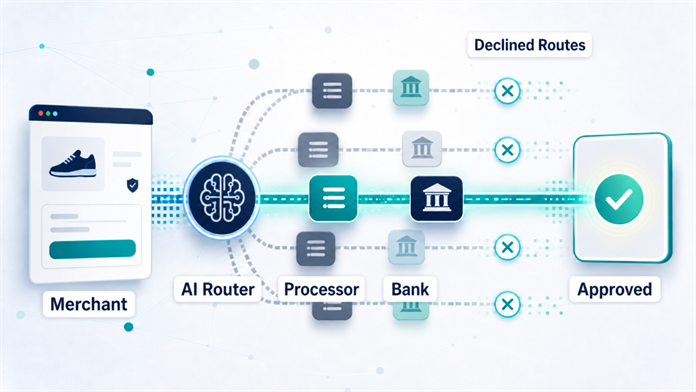
AI payment routing helps merchants recover real sales that banks may wrongly decline. A customer can have enough money, use the right card, and still see a payment fail. A small mismatch deep in the payment chain can trigger a bank’s risk checks.
For a merchant, that failure means more than a lost sale. It can raise support costs, weaken trust, and push a buyer toward a rival. However, AI can spot many false declines and choose a better way to process the payment.
Why Good Payments Get Declined
Every card payment passes through several systems. The merchant sends a request to a processor or payment gateway. It then moves through a bank, a card network, and the customer’s bank. Each firm applies its own rules and risk checks.
A real payment may fail because the request has weak data or uses a poor route. It may also look odd to the bank. For example, a bank may reject a purchase from a new device even when the customer approved it. A retry that sends the same request may fail again.
Fixed rules struggle because payment habits change fast. In contrast, machine-learning models can compare a live sale with many past results. They can then judge which action has the best chance of success.
How AI Payment Routing Works
AI payment routing does more than send a sale to the cheapest processor. It weighs the chance of success, fraud risk, network load, and cost. The model can also learn how each bank responds to message formats, payment types, and retry timing.
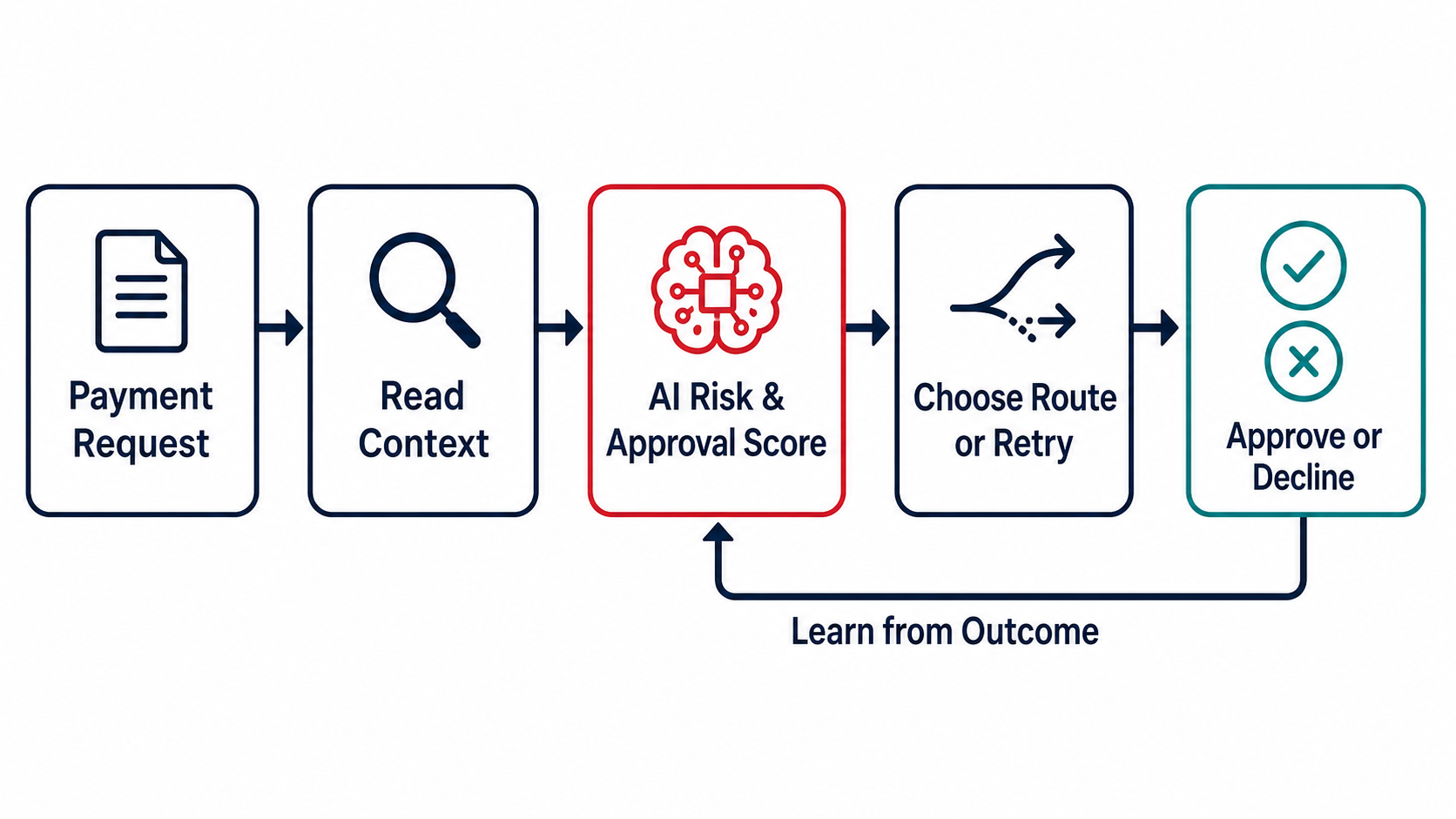
The process usually has four stages:
- Read the payment context. The system reviews the amount, currency, device, merchant type, bank, and past payment habits.
- Estimate success and fraud risk. A model predicts whether the payment is real and whether the bank will accept it.
- Choose an action. The platform may improve the message, select another processor, ask for an extra check, or retry later.
- Learn from the outcome. The approval or decline becomes fresh training data for later decisions.
Stripe offers one public example. Its Adaptive Acceptance system uses AI to improve requests and retry likely false declines at once. Stripe said the system recovered $6 billion in false declines during 2024. It also reported a sixty percent rise in retry success from the prior year.
The figures come from Stripe, so they cover its own network and users. Even so, they show why a small rise in approvals can create large gains at scale.
Fraud Control and Approval Must Work Together
A routing model cannot chase approvals without limits. If it lets risky payments pass, fraud losses and disputes may rise. Therefore, the model must meet two linked goals. It should accept more real payments and block more fraud.
This balance depends on good data. Device signals, payment history, merchant habits, and bank replies can improve the model’s judgment. Yet teams should use these signals under clear rules for privacy and data storage.
Human review also matters. Payment teams need limits for odd model behavior, a quick way to roll back changes, and regular checks on false alerts. In addition, they should test whether the model treats groups or places unfairly.
Visa describes a similar goal for its authorization tools. Its Visa Protect platform uses real-time risk scores to help issuers distinguish good payments from fraud. The central lesson is simple: fraud scoring and authorization design belong in the same operating system.
What AI Payment Routing Means for Indian Firms
India’s payment market includes cards, Unified Payments Interface payments, wallets, bank transfers, and payment firms. As a result, a business may manage several payment paths at once. That mix creates more route choices, but it also raises risk.
The Reserve Bank of India requires payment firms to maintain strong controls. Its 2024 directions for non-bank payment system operators cover risk checks, APIs, vendor risk, incident response, and data security.
These duties shape how firms should use routing models. A merchant or payment firm needs a named model owner, sound audit records, and tested backup rules. Meanwhile, any outside AI or cloud provider should sit inside the firm’s vendor-risk plan.
Readers can explore the wider topic through FinTech Central’s AI in Payments and Lending coverage. The site’s AI in Finance section also explains how similar models affect other financial workflows.
A Practical Starting Point
Payment leaders should start with one clear business problem. False declines on repeat buyers or repeat bills work well because the firm already holds useful outcome data.
First, measure the current approval rate by bank, payment type, device, and customer group. Next, split hard declines from cases that a better message or route could save. Then run the AI model beside the old process before it makes live choices.
The test should track saved sales, added fraud, chargebacks, speed, and customer complaints. Otherwise, a higher approval rate may hide new losses. Teams should also compare the model with simple rules to prove that the added cost pays off.
The Real Value Is Better Payment Judgment
AI payment routing can turn payment systems into a source of sales growth. It helps firms learn from each result and make a better choice on the next sale. Still, strong systems build in security, fair customer care, and sound controls.
For payment leaders, the next step is clear. Find one costly decline pattern, build a safe test, and measure the full result. A routing model earns trust when it saves real sales without weakening fraud control.
FINTECH BRIEFING · A FUTURECENTRAL BRIEFING
Get practical financial AI analysis in your inbox.
Useful signals, focused analysis and decision questions on AI in banking, payments, lending, insurance, wealth and risk.
Free to subscribe. Confirm your email after signing up. Unsubscribe at any time.