


Vehicle telematics can turn each trip into useful insurance data. A car, phone app, or small device can track how far and how safely you drive. An insurer can use those facts to shape usage-based cover and give safety tips.
The basic idea is easy to grasp. Yet a sound plan needs reliable indicators, transparent explanations, and more than a stream of data. Drivers also need a clear benefit when they share their data.
What Vehicle Telematics Can Track
Telematics links a vehicle to a digital information network. The system may monitor miles or kilometers, trip times, speed, hard braking, quick starts, and sharp turns. It may also spot mobile-phone activity during a trip.
Some plans use a device fitted inside the car, while others read data from the car itself. A phone app offers another route.
One event rarely tells the full story. For example, a hard stop may show poor driving or mean that the driver avoided a crash. Night trips can carry more risk on some roads, although a nurse on a late shift may have no choice. Good models look at long-term patterns and the facts around each event.
How Vehicle Telematics Supports Usage-Based Cover
Usage-based motor cover often takes two forms. Pay-as-you-drive links part of the price to distance. Meanwhile, pay-how-you-drive looks at driving behavior through speed, braking, trip time, and other agreed indicators.
Distance is easy for most drivers to check, while a behavioral risk score is harder to explain. The insurer may combine many indicators and give each one a level of importance. As a result, drivers need to know how the score works. They also need a fair way to question a wrong score.
In July 2022, India’s Insurance Regulatory and Development Authority of India (IRDAI) issued a circular on new motor-insurance add-ons. It covered pay-as-you-drive and pay-how-you-drive options. An earlier IRDAI working-group report also backed telematics for motor insurance. These steps gave insurers room to test plans tied to actual car use.
How Driving Data Becomes a Risk Signal
A sound plan follows four clear stages.
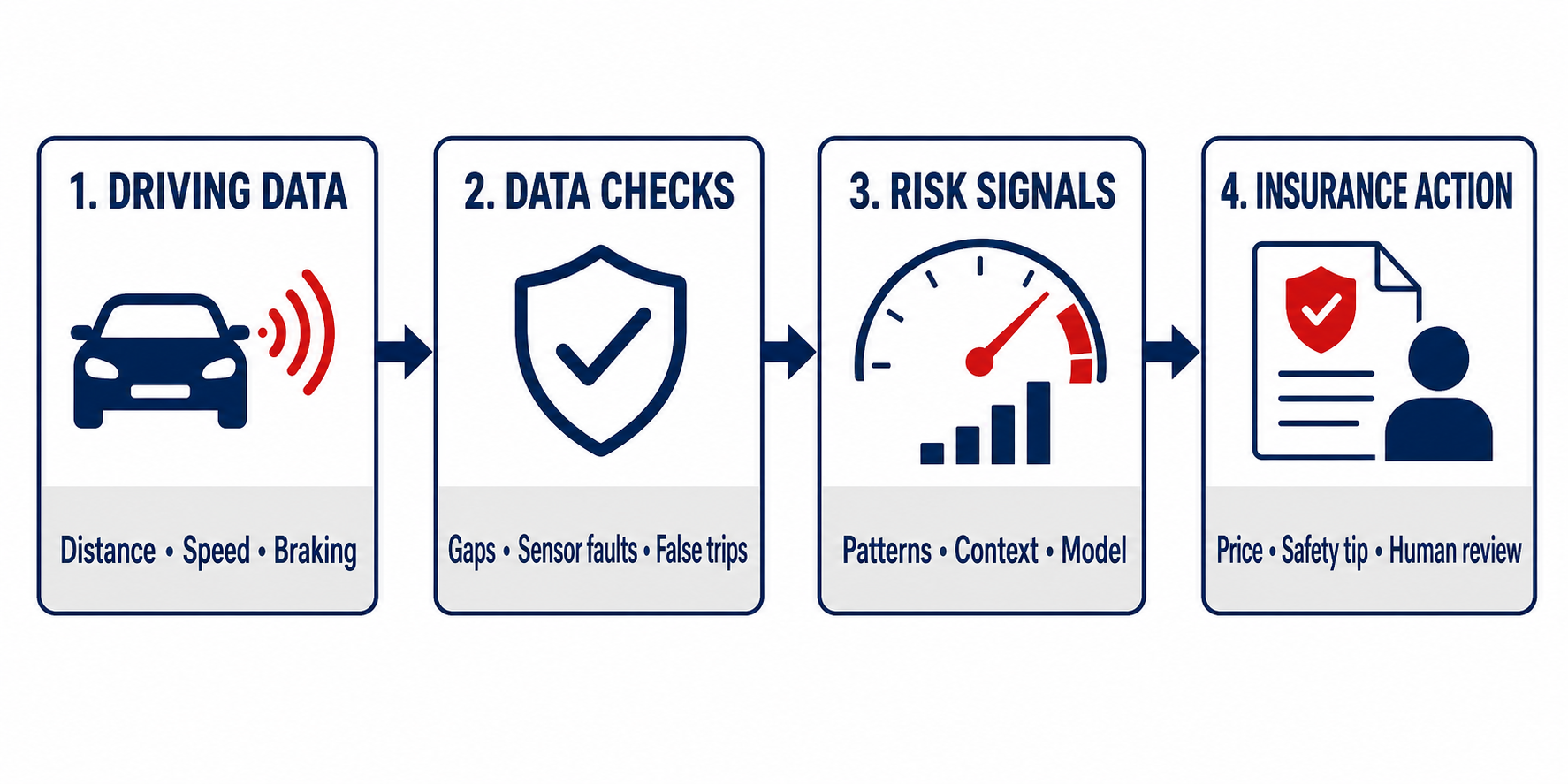
First, the app or device gathers data that the driver agreed to share. Next, the system checks for gaps and sensor faults, then turns validated information into risk indicators. Last, the insurer applies a documented policy rule and explains the result.
This flow keeps evidence separate from decisions. Suppose the model finds frequent hard braking on one route. The insurer can show the pattern and offer personalized safety guidance. One hard stop should not prove that a person drives badly.
Some cases still need a person to review them. A reviewer can evaluate a broken device, a shared car, or an emergency stop. This human evaluation matters when a score changes the premium or renewal terms.
The Value for Drivers and Insurers
Drivers may get a price that fits actual car use because a car kept at home has less road exposure. Safe-driving tips may also help a driver spot risky habits.
Vehicle telematics gives insurers a clearer view of risk between the sale of a policy and a claim. The data can help with plan design, customer groups, and early crash alerts. In turn, an alert can start the process in our guide to motor claims automation.
More data does not always mean a better price. Faulty sensors and weak tests can lead to poor scores. A model may also work well for one type of car and fail for another. Therefore, insurers should test it across roads, regions, cars, and driver groups.
Privacy and Fair Treatment
Car data can reveal more than driving style. Time and place records may show where a person lives or works. They may even point to a place of worship or a health clinic. An insurer should collect only the data needed for the plan.
Consent must be clear. Drivers should know what the system tracks, how often it does so, who can see the data, and how it affects price.
Practical controls matter as well. A driver should be able to flag a device fault or a passenger trip and ask for a score review. Clear time limits for data storage can also reduce harm after a breach.
A Checklist Before Launch
Before a vehicle telematics launch, the insurer should answer these questions:
- Which signals have a proven link to insured risk?
- How will the system treat gaps and shared cars?
- When must a person review the model’s result?
- How can a driver see and question a score?
- When will the insurer delete trip data?
- How often will the team test for drift or unfair results?
The answers form a shared plan for the whole firm. Claims, pricing, legal, tech, and service teams can then work from the same rules.
A Good Place to Start
An insurer can begin with a simple distance-based plan because the measure is easy to show and explain. The team can then test data quality, bills, help desks, and disputes before it adds more driving signals.
A pilot should serve a clear group, use few signals, and set simple tests for success. The team should track information quality, complaints, premium stability, and driver confidence. If drivers cannot explain the plan, it is not ready to grow.
Vehicle telematics can connect price, safer driving, and claims support when transparent governance protects customer choice. Read more about sound automation in FinTech Central’s AI in Insurance section.
FINTECH BRIEFING · A FUTURECENTRAL BRIEFING
Get practical financial AI analysis in your inbox.
Useful signals, focused analysis and decision questions on AI in banking, payments, lending, insurance, wealth and risk.
Free to subscribe. Confirm your email after signing up. Unsubscribe at any time.