

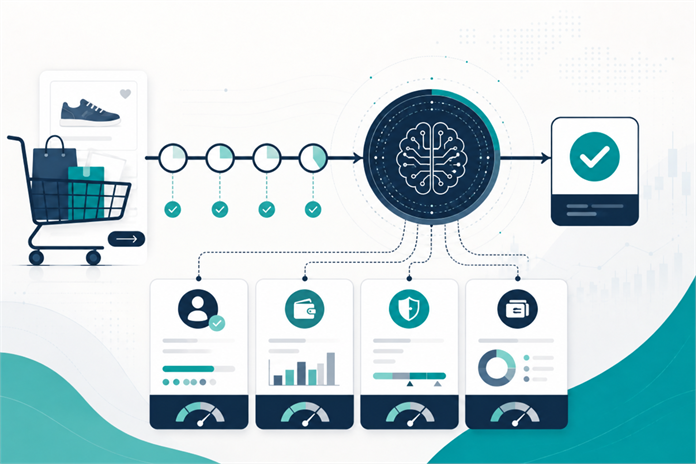
AI in BNPL can help lenders make rapid and responsible credit decisions, and that balance matters at checkout. A weak choice may approve a risky loan, turn away a good buyer, or miss debt held with another firm.
Buy Now, Pay Later has a simple appeal because a shopper can split a bill into smaller payments. Many plans charge no interest when each payment arrives on time. Yet the smooth checkout hides a complex lending assessment: the provider must check identity, fraud, debt, and the buyer's ability to pay within seconds.
Why AI in BNPL Matters
Old credit models often use a credit file, stated income, and fixed rules, and those inputs still help. However, a small loan at checkout poses a new data problem. The lender has little time and may know very little about a new buyer.
AI can read more timely signals, including past payments, account use, the type of purchase, and device data. A model can then estimate the risk of missed payments or fraud. Each paid installment gives the lender fresh facts about a repeat user.
This wider view may help people with thin credit files and spot a rise in risk that an old score may miss. For example, a buyer may repay small loans on time yet open too many new plans in one week.
Recent data shows why this matters. A Consumer Financial Protection Bureau study found that about sixty-three percent of BNPL users in its sample had loans running at the same time during 2022. One-third held such loans across more than one firm. Although the study covers the United States, it shows a common gap: each lender may see only part of a person's debt.
How AI in BNPL Improves Underwriting
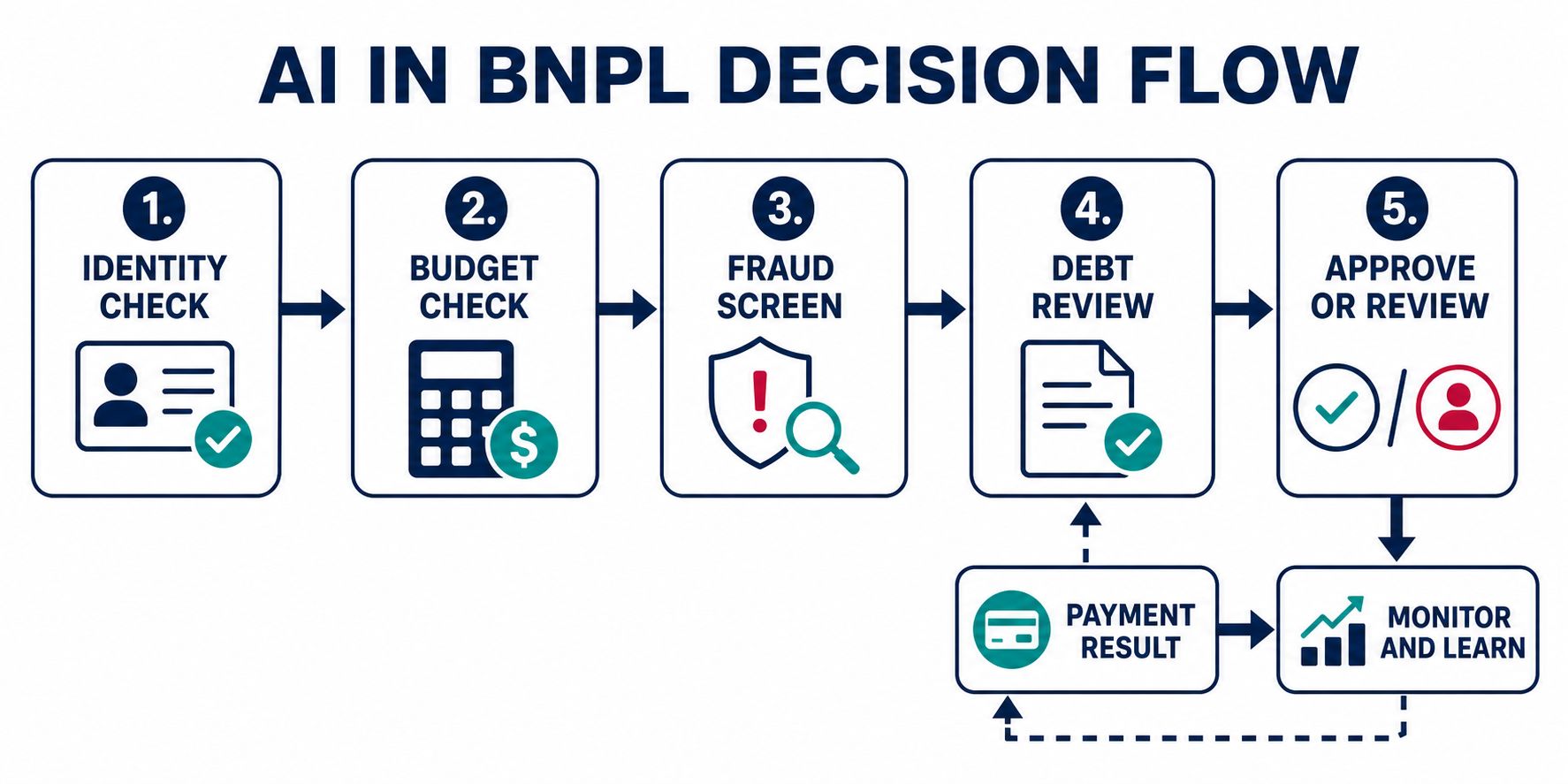
An AI in BNPL system can aid several choices during the life of a loan. Each choice needs clear data rules and limits.
Identity and fraud checks
Fraud models can compare a device, place, phone number, store, and sale with past use. They may flag a stolen account, a false identity, or a burst of linked loan requests. When risk is unclear, the system can ask for one more check while familiar and low-risk sales move ahead with less delay.
Repayment and budget checks
Credit models can test how a new payment fits a buyer's recent money habits. With clear consent, bank data may show steady income and regular bills, while past BNPL use adds another clue. Even so, a good risk score does not prove that a new loan fits the buyer's budget, so the lender still needs defined lending thresholds.
Debt and loan-stacking alerts
A provider's own records can reveal fast loan growth on its platform. Where local rules allow it, shared credit data may give a wider view, and bank data can also help when the buyer agrees to share it. Alerts can look for many loan requests, missed payments, and a sharp rise in monthly dues. The lender may then cut the limit, ask for more facts, or explain why it declined the loan.
Early help after approval
Risk checks should continue after the sale because a model may spot a failed payment or a sudden change in account use. An early reminder may prevent a small issue from growing, and the lender may also offer suitable help under its support policy. Any collection step should be fair and measured.
AI in BNPL Needs Strong Controls
Speed makes BNPL useful, but it can spread an error fast, and a biased input may harm many buyers before the team sees the pattern. Poor data can also make a weak model look sound.
Understandable explanations should form part of the product, and a lender needs to explain why it denied a loan or changed a limit. The Bank for International Settlements says that tools can help explain AI use in credit decisions. It also warns that one method will not suit every model, so firms need sound records, tests, and human review.
The model owner should track approvals, late payments, fraud, complaints, and results for key customer groups. Teams must also test what happens when the economy shifts, and they need backup rules plus a quick way to stop a faulty model.
Data use needs equal care. A provider should collect data for a clear purpose, seek valid consent, limit staff access, and set a fair time to delete old records. A clue may improve a score yet still be unfair to use if the buyer cannot grasp its purpose.
What India’s Rules Mean for AI in BNPL
In India, a bank or finance company stays responsible when an outside platform runs part of the loan journey. Reserve Bank of India rules focus on clear costs, consent, privacy, complaints, and the flow of loan funds.
The RBI's 2024–25 Annual Report also outlines safeguards in the Reserve Bank of India (Digital Lending) Directions, 2025. A loan screen should name the regulated lender. It should show the loan sum, annual percentage rate (APR), term, and key conditions. The platform should not use screen design to push a poor loan choice.
These rules apply to AI in BNPL, and a model may rank offers or set a credit limit. However, the buyer still needs transparent costs and terms. The lender must also oversee each outside firm that helps make or deliver the choice.
Indian lenders can link this work with AI in open banking. Data shared with consent can give a better view of income and bills. Strong data rules must guide its use. Our wider AI in Payments and Lending section covers related changes in credit and payment systems.
A Safer Way to Start
BNPL firms should begin with one clear problem. First-payment default is one option. False declines among repeat buyers may be another. A narrow test makes it easier to compare the AI model with current rules.
Before the test, the team should name the data it may use. It should also set customer notices, loan limits, and rules for human review. Next, the model can run beside the old process without making live choices. This trial shows which results would change.
The test should track missed payments and fraud loss. It should also measure approval time, complaints, staff overrides, and results across customer groups. A model has failed if it cuts bad debt only by rejecting too many good buyers.
Checks must continue after launch because data patterns change, the mix of stores shifts, and people react to stress in the economy. Regular tests can find model drift before it harms buyers or the loan book.
Better Choices at Checkout
AI can help BNPL firms respond to new facts and make quicker loan choices. It can spot fraud, identify good buyers, and warn when debt may be rising. These gains rely on sound data, fair tests, clear reasons, and a lender that owns each outcome.
A small and well-run trial is the best starting point. Place a customer safety goal next to every business goal. Fast approval creates value only when the loan remains fair and manageable.
For a guide to the product itself, read Buy Now Pay Later: Essential Benefits and Risks.
FINTECH BRIEFING · A FUTURECENTRAL BRIEFING
Get practical financial AI analysis in your inbox.
Useful signals, focused analysis and decision questions on AI in banking, payments, lending, insurance, wealth and risk.
Free to subscribe. Confirm your email after signing up. Unsubscribe at any time.